

UN HLPF Side Event Highlights Volunteer Ecosystems and Youth Leadership for Sustainable Development
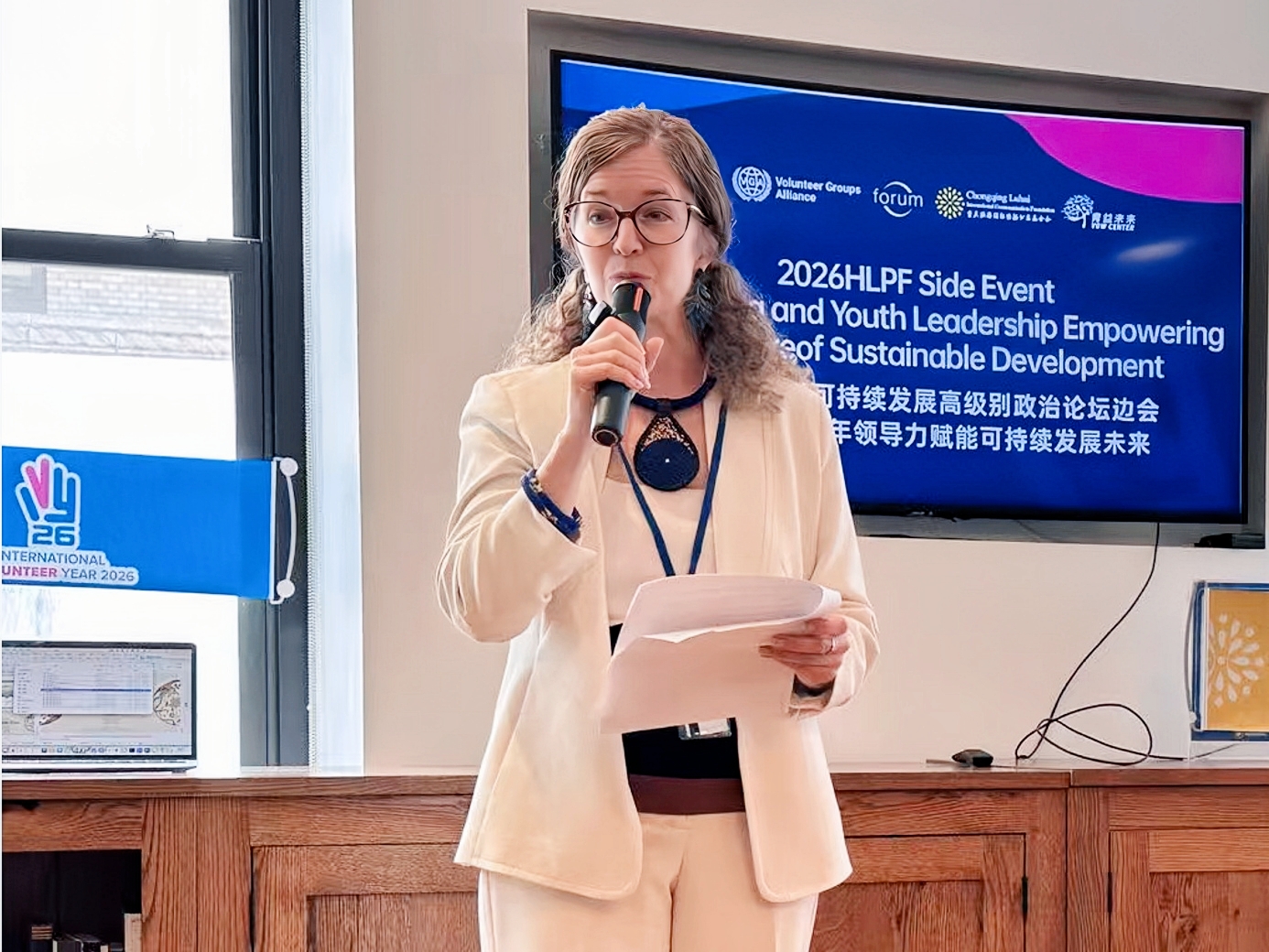
Heather Shapter — Board Chair, Global Volunteering Forum
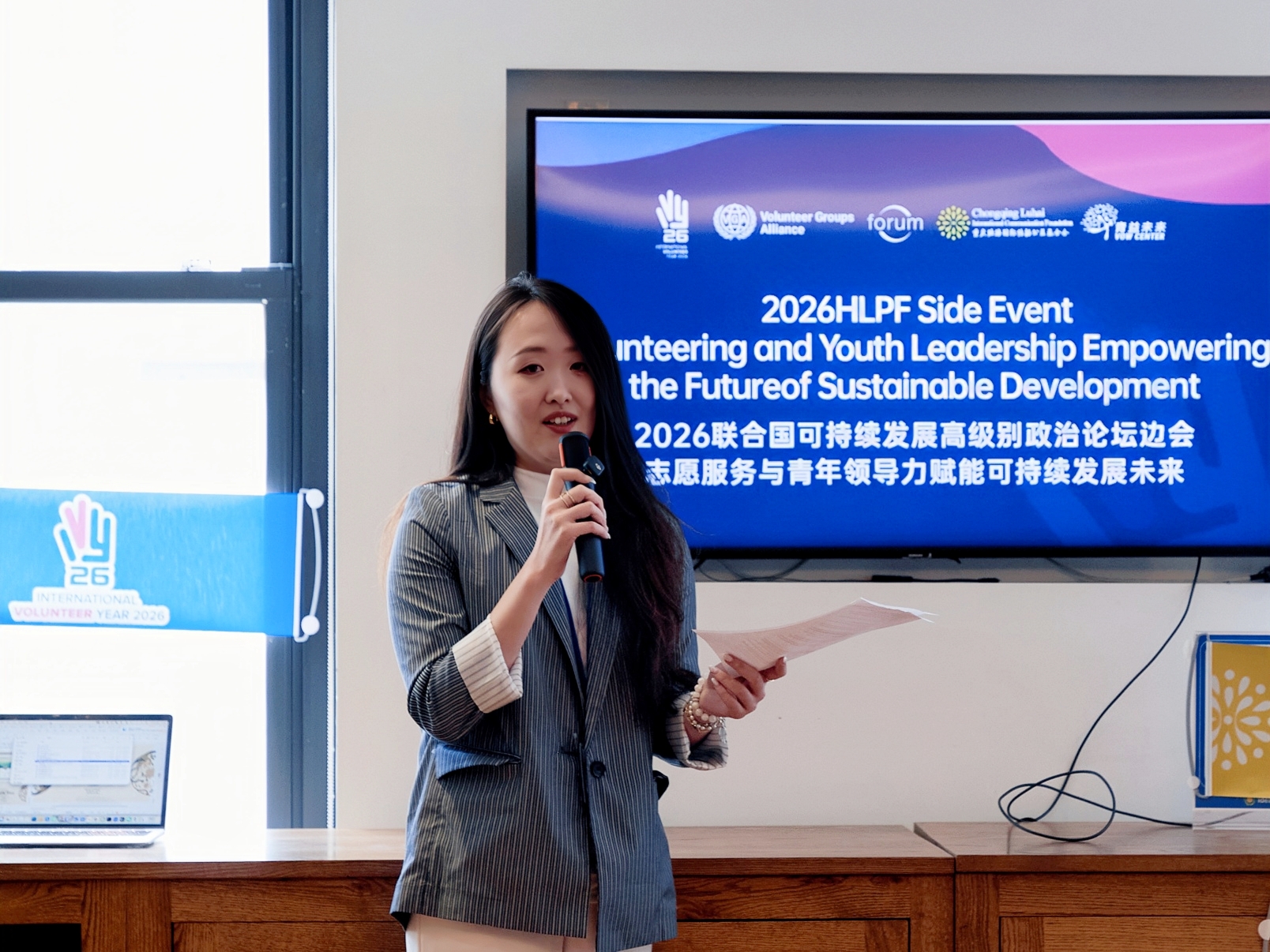
Muyao Wang — Assistant to the Chairman, Grouphorse Group
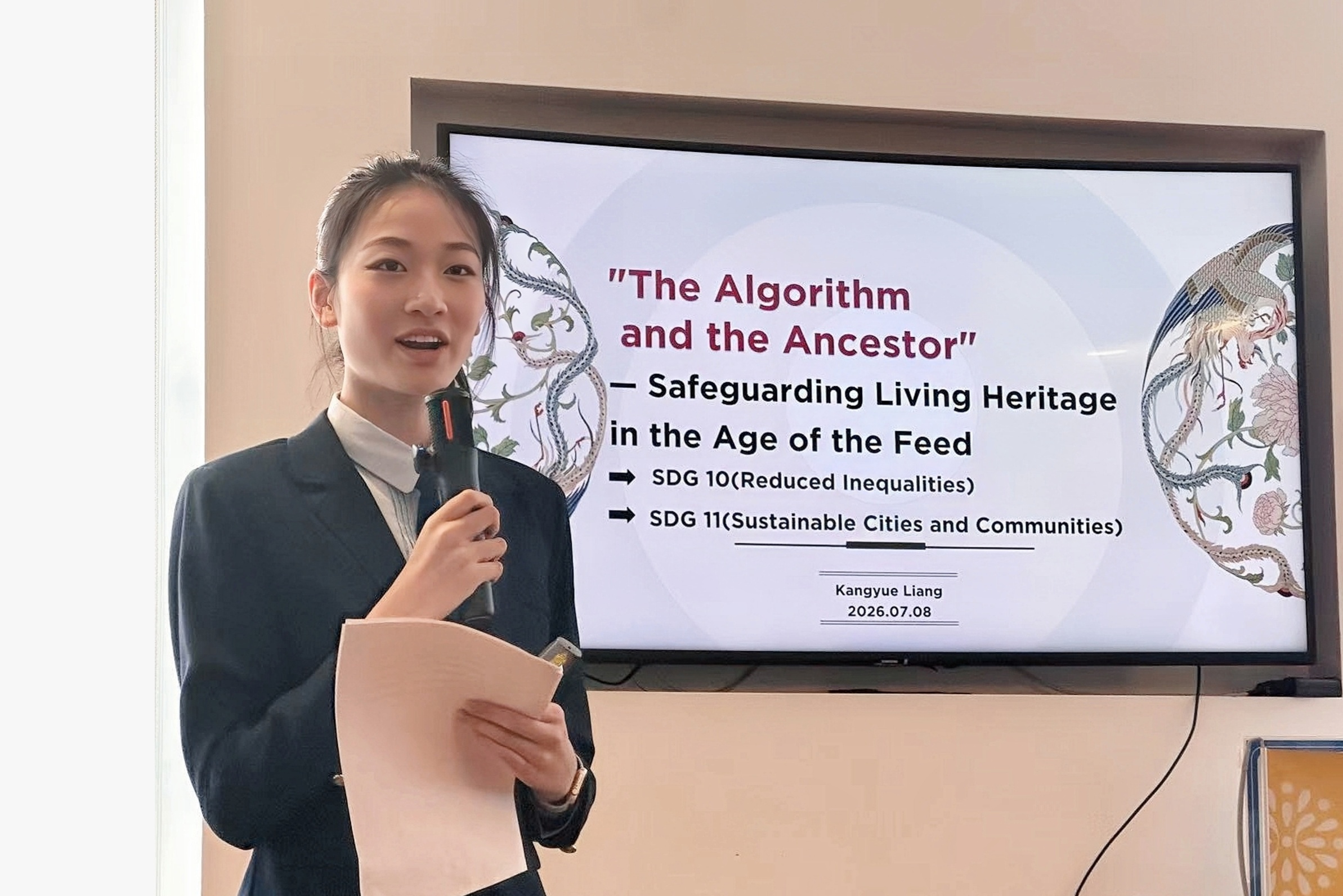
Kangyue Liang — Student Volunteer, Shanghai Starriver Bilingual School
Convened annually under the auspices of the United Nations Economic and Social Council, the High-level Political Forum, or HLPF, is the United Nations’ central platform for reviewing progress toward the Sustainable Development Goals. It brings together governments, United Nations entities, international organizations, civil society and other stakeholders to assess the 2030 Agenda, share solutions and accelerate action.
The event, “Volunteering and Youth Leadership: Empowering the Future of Sustainable Development,” was held at the Volunteer Groups Alliance office in New York during International Volunteer Year 2026.
Led by the Volunteer Groups Alliance and co-organized by the Global Volunteering Forum, the Chongqing Land-Sea International Forum Foundation and VOW Center, it explored how volunteering can accelerate implementation of the 2030 Agenda through stronger institutions, cross-border cooperation, practical standards and locally led action.
Reflecting the HLPF’s emphasis on multi-stakeholder participation, the programme focused on investment in volunteer ecosystems, international volunteer cooperation, governance and safeguarding for grassroots organizations, and youth-led initiatives in health, biodiversity, waste reduction and cultural sustainability.
David Styers, General Coordinator of the Volunteer Groups Alliance, moderated the session. He said volunteering should be recognized as implementation infrastructure connecting global commitments with practical action in local communities.
Heather Shapter, Board Chair of the Global Volunteering Forum and Chief Executive Officer of Crossroads International, delivered the keynote address, placing volunteering within the broader architecture of sustainable development.
Shapter described volunteering as a vital foundation for resilient and sustainable societies. At a time of interconnected global challenges, she called on governments and development partners to integrate volunteering systematically into development strategies, invest in strong volunteer ecosystems and build cross-border networks for public-interest cooperation.
Respecting, protecting and empowering volunteers, she said, enables communities to turn solidarity into sustained action, strengthen resilience and build the long-term capacity needed to deliver the Sustainable Development Goals.
Chen Can, Deputy Secretary-General of the Chongqing Land-Sea International Forum Foundation, presented the foundation’s model for international volunteer cooperation.
She said it has worked with more than 180 civil-society organizations across 42 countries, developed cross-border public-interest projects, established a dedicated international volunteer-service fund, supported six specialized international volunteer teams and organized more than 500 activities involving over 2,000 local volunteers and 16,000 hours of service.
The foundation has also made what it described as the first non-country-specific contribution to the United Nations Volunteers Special Voluntary Fund.
Muyao Wang, Assistant to the Chairman of Grouphorse Group and a New York volunteer with VOW Center, introduced the Global Volunteering Standard Self-Assessment Handbook and three companion toolkits designed to help grassroots organizations strengthen accountable volunteer management.
The handbook translates the third edition of the Global Volunteering Standard into 208 tiered indicators across four themes and 13 operational areas.
Supporting resources include operational templates, Sustainable Development Goal activity ideas and practical guidance published through the United Nations Volunteers Knowledge Portal.
Wang said safeguarding should extend into the digital environment. As volunteer-management systems increasingly move onto data platforms, she said data collection, protection and use should follow the “do no harm” principle so that technology strengthens trust and accountability rather than merely improving efficiency.
Practical standards, she added, should help organizations improve governance while remaining understandable and accessible to grassroots volunteers.
Five youth representatives then presented community-based initiatives demonstrating how young people can contribute practical solutions across different Sustainable Development Goals.
Shiyang Zhang introduced a mental-health programme that brings medical professionals and international youth volunteers to underserved mountain communities, with planned expansion to Kenya and Thailand.
Hanrui Hu described university volunteering as a practical platform for developing social responsibility, professional skills and youth-led implementation of the Sustainable Development Goals.
Kangyue Liang, a student volunteer at Shanghai Starriver Bilingual School, examined how attention-driven recommendation systems can place living cultural traditions at a structural disadvantage.
Drawing on 15 years of Chinese dance training, field study of Muqam culture in Xinjiang and data from the UNESCO Institute for Statistics, she argued that digital platforms increasingly compress historically layered traditions into short, attention-driven fragments, weakening cultural context and intergenerational transmission.
Liang proposed a “Contextual Integrity Standard” for heritage digitization and platform dissemination. She called for digital content to preserve historical background, community meaning, transmission lineages and the participation of young cultural bearers.
Safeguarding living heritage, she said, requires not only digital preservation but also the active participation of young people in cultural transmission and governance.
Anran Xu presented “City Bird Interpreter,” an artificial intelligence-assisted biodiversity-monitoring initiative combining species identification with cloud-based observation to encourage public participation in ecological monitoring.
Jingchao Lu introduced “Birdtopia,” a zero-waste ecological floating-island project constructed from recycled plastic bottles that combines waste reduction, habitat restoration and environmental education.
Throughout the discussion, speakers agreed that effective volunteering depends on the combined strength of shared values, practical standards, institutional capacity, community ownership and credible evidence.
They said international cooperation models and global guidance should remain adaptable to local conditions, digital tools should be governed by safeguarding principles, and young people should be recognized not only as beneficiaries but also as organizers, innovators and partners in sustainable development.
Participants called on governments, international organizations, educational institutions and civil-society networks to strengthen investment in volunteer ecosystems, expand access to practical governance tools and support locally rooted, youth-led initiatives.
They also urged organizations to establish transparent rules for consent, data protection and responsible digital use, ensuring that technological innovation reinforces dignity, trust and accountability.
The event concluded with a call for sustained cooperation among international volunteer networks, local organizations, educational institutions and youth leaders beyond the HLPF.
Speakers said progress should be measured through verifiable improvements in safety, inclusion, ecological outcomes, cultural continuity and delivery of the Sustainable Development Goals.
Bill TANG
Grouphorse
email us here
Legal Disclaimer:
EIN Presswire provides this news content "as is" without warranty of any kind. We do not accept any responsibility or liability for the accuracy, content, images, videos, licenses, completeness, legality, or reliability of the information contained in this article. If you have any complaints or copyright issues related to this article, kindly contact the author above.
